Ammonia is one of the most efficient and environmentally clean refrigerants available, and it is the backbone of industrial cooling across Saudi Arabia. But ammonia is also a regulated substance with well-defined safety requirements. Treating ammonia refrigeration safety as a design problem — not a paperwork exercise — is the difference between a plant that operates safely for decades and one that creates unnecessary risk for staff, neighbors, and the business.
This guide summarizes how to approach ammonia refrigeration safety and compliance for industrial facilities in Saudi Arabia, referencing the major international standards and explaining what they mean in practice.
Why Ammonia Refrigeration Safety Requires a System Approach
Ammonia (NH3, refrigerant R-717) is classified as a B2L refrigerant under ASHRAE 34 — toxic at high concentrations, but mildly flammable only in narrow conditions and with a strong odor detectable well below dangerous concentrations. In practice, well-engineered ammonia plants have an excellent safety record. Problems almost always trace back to a system-level failure: a missing layer of protection, inadequate training, a bypass left in place, or a maintenance issue ignored until it became a leak.
Proper ammonia refrigeration safety is built in layers:
- Inherently safer design — low-charge systems, dedicated plant rooms, proper layout
- Engineered controls — ventilation, detection, relief, interlocks
- Administrative controls — procedures, training, permits to work
- Personal protective equipment — respirators, suits, eye protection
- Emergency response — detection, evacuation, external coordination
- IIAR 2 — Standard for Safe Design of Closed-Circuit Ammonia Refrigeration Systems
- IIAR 6 — Inspection, Testing, and Maintenance of Closed-Circuit Ammonia Refrigeration Systems
- IIAR 7, 8, 9 — Operating procedures, decommissioning, and plant operation
- ASHRAE 15 — Safety Standard for Refrigeration Systems
- ASHRAE 34 — Designation and Safety Classification of Refrigerants
- EN 378 — European standard on refrigeration systems safety
- OSHA PSM — Process Safety Management (used as a reference in many Saudi projects)
- Two means of egress from opposite sides
- Clear operator routes with no ammonia piping overhead
- Emergency equipment stations at each exit
- Sufficient clearances for maintenance and service
- Low-level alarm (typically 25 ppm) for operator awareness
- Mid-level alarm (100–150 ppm) to start emergency ventilation and initiate evacuation
- High-level alarm (>500 ppm) for plant shutdown and external notification
- Detectors located both at high points (leak migration) and low points (liquid pooling)
- Regular calibration and maintenance
- Emergency ventilation starts
- Compressors and pumps stop
- Isolation valves close
- Audible and visual alarms activate
- Notifications are sent to designated personnel
- Full-face respirators with ammonia cartridges or SCBA for higher exposures
- Chemical splash suits
- Cut-resistant and chemical-resistant gloves
- Emergency eyewash and safety showers immediately accessible
- Clear evacuation routes and assembly points
- Coordination with Civil Defense and local authorities
- Communication protocols — internal and external
- Designated emergency response team with specific training
- Regular drills covering small leaks, large releases, fires, and medical emergencies
- Post-event review and lessons learned
- Fundamentals of refrigeration and ammonia properties
- Plant-specific operation and controls
- Safety systems, alarms, and emergency actions
- Maintenance procedures and tools
- Documentation and records
- Documentation completeness and accuracy
- Functional testing of safety systems
- Physical condition of equipment, piping, and insulation
- Records of training, inspection, and maintenance
- Compliance with applicable standards and regulations
- Operator interviews and observation of actual practice
- Coordination with Civil Defense for design review and operational approval
- Local insurance and HSE expectations, which may exceed code minima
- Language and multilingual signage for a diverse workforce
- Climate effects on PPE, ventilation, and emergency response
- Integration with corporate HSE programs for multi-site operators
Every layer exists because any single layer can fail.
Applicable Standards and References
The most widely applied international standards for ammonia refrigeration are:
Within Saudi Arabia, Civil Defense regulations, SASO and municipal requirements, and insurer expectations also shape the compliance landscape. A capable execution partner understands how to integrate these into a single, coherent safety case for a plant.
Inherently Safer Design for Ammonia Refrigeration Safety
The strongest safety improvements come from design choices made before any equipment arrives on site.
Low-Charge Systems
Modern packaged and modular plants can deliver megawatt-class capacity with a few hundred kilograms of ammonia instead of several tons. Less ammonia means smaller potential releases and lower regulatory impact. Wherever feasible, low-charge designs are preferred for new projects in Saudi Arabia.
Dedicated Plant Rooms
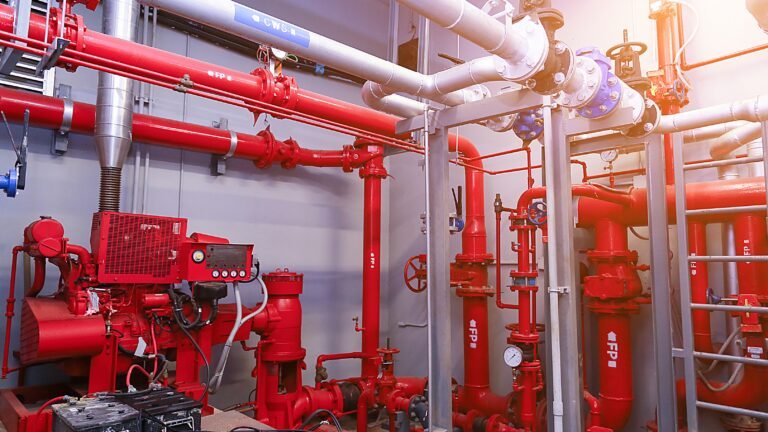
A dedicated, fire-rated machinery room separates ammonia equipment from production areas. This localizes any release, simplifies ventilation and detection, and protects production staff.
NH3/CO2 Cascade and Secondary Loops
Using CO2, glycol, or brine to distribute cooling through production areas keeps ammonia in the plant room. This architecture is increasingly the default for food, dairy, and cold storage projects.
Layout and Egress
Machinery room layout should include:
Engineered Safety Systems
Ventilation
Machinery rooms must have continuous emergency ventilation sized per applicable standards — typically capable of several air changes per minute when gas is detected. Ventilation discharge is located away from air intakes, occupied areas, and public spaces.
Gas Detection
Ammonia gas detection is a core element of ammonia refrigeration safety. A complete system includes:
Pressure Relief
Relief valves protect vessels and piping from over-pressure. Discharge is routed to safe locations — outdoors, away from personnel, with sufficient height and dispersion. Rupture discs may be used upstream of relief valves for protection against corrosion.
Interlocks and Shutdown Logic
Engineered interlocks automatically act when detection or safety systems trip:
Fire Protection
Dedicated detection and suppression in the machinery room, combined with interfaces to the plant fire alarm system and Civil Defense, close out the engineered layer.
Operational Safety
Standard Operating Procedures
Written procedures cover normal operation, startup, shutdown, maintenance, purging, oil draining, charging, and emergency response. Every operator works to the same playbook.
Permit to Work
Any non-routine work — hot work, entry to confined spaces, work on pressurized lines — requires a permit that confirms hazard assessment, isolations, PPE, and supervisor sign-off.
Lockout-Tagout
Before maintenance, energy sources are isolated, locked, tagged, and verified dead. This protects both the technician and the plant.
Housekeeping
Clean, well-organized plant rooms make problems visible. Oily floors, blocked exits, leaking fittings, and missing signage all signal deeper issues.
Documentation and Records
Ammonia refrigeration safety depends on records: inspection logs, maintenance history, alarm events, training certificates, drawings, and procedures. These should be kept current and accessible to both operators and auditors.
Personal Protective Equipment
For routine operation, basic PPE — eye protection, chemical-resistant gloves, safety shoes — is typically sufficient. For specific tasks such as oil draining, charging, or emergency response, additional PPE is required:
PPE is stored at predictable, signed locations near plant room entrances, not hidden in lockers that staff cannot reach in an emergency.
Emergency Response
Every ammonia plant must have an emergency response plan tailored to its site. Core elements include:
A plan that exists only on paper fails in real emergencies. Regular drills and realistic training are what make ammonia refrigeration safety effective.
Training and Competence
Operators, maintenance technicians, and supervisors require structured training:
Training should be refreshed annually and after any significant plant change.
Audits, Inspections, and Continuous Improvement
Regular audits — internal and third-party — catch the drift that naturally accumulates in any operation. An effective audit program covers:
Findings should be tracked, prioritized, and closed. Continuous improvement is the hallmark of mature ammonia refrigeration safety programs.
Saudi-Specific Considerations
Projects in Saudi Arabia involve additional considerations:
Working with an execution partner experienced in these local realities prevents avoidable delays and gaps.
Executing a Safe Refrigeration Project
Saudi ProTech integrates ammonia refrigeration safety from the earliest concept through long-term operation. Our approach includes low-charge design where practical, engineered safety systems to applicable international standards, robust documentation, operator training, and long-term support across Saudi Arabia and its main cities — Jeddah, Riyadh, and Dammam.
If you are planning a new ammonia refrigeration plant, expanding existing capacity, or auditing an operating facility against modern safety expectations, contact Saudi ProTech’s industrial refrigeration team to discuss your project.