PEB foundations in Saudi Arabia are the single most-undersized scope on industrial projects. The combination of concentrated column reactions from long-span PEB and variable Saudi soil conditions (sandy in most cases, expansive clay in some, high water table on coast) makes foundation design more nuanced than a typical concrete-frame building. Working reference for designers, contractors and PMs.
Saudi soil conditions — three broad categories
Sandy soils (most common)
Riyadh basin, Eastern Province inland, most of Hejaz interior — fine to medium sand, often well-graded, moderate to good bearing capacity. Bearing pressures typically 100-200 kPa allowable for shallow foundations. Settlement-dominated for larger footings.
Coastal soils (Jeddah, Dammam, Khobar, Jubail, Yanbu)
High water table (sometimes within 1-2 m of surface), saline groundwater attacks concrete, often loose sand or soft clay layers. Bearing pressures often poor; piling common for larger structures. Concrete mix design must include sulfate-resistant cement and sulfate-resistance assessment.
Expansive clay (some inland areas)
Pockets of montmorillonitic clay that swell on wetting and shrink on drying. Foundations must isolate from seasonal moisture variation. Often pile foundations or stiff raft.
Geotechnical investigation — the necessary first step
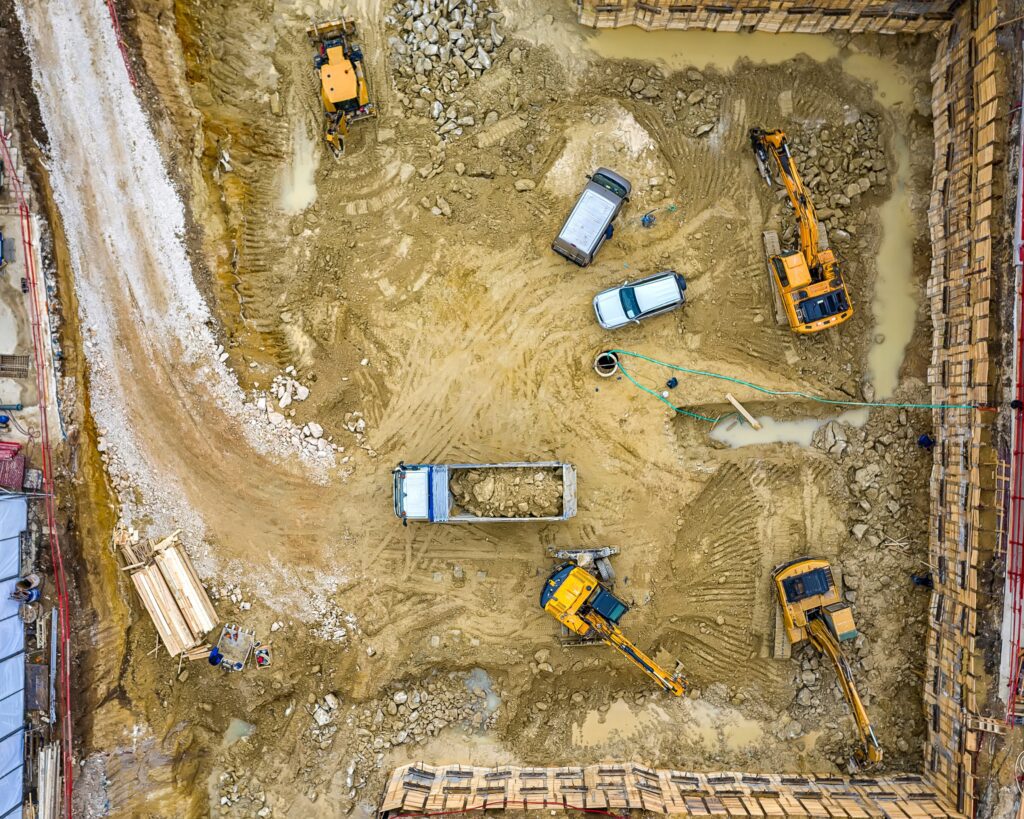
Every PEB project should start with a geotechnical investigation report covering:
- Boreholes to 1.5× foundation width or deeper (typical 8-15 m for PEB on shallow founds, 30+ m where piling is contemplated)
- SPT or CPT at regular intervals down the borehole
- Soil classification per ASTM D2487 or BS 5930
- Groundwater table and chemistry (sulfate, chloride, pH for concrete and steel attack)
- Recommended allowable bearing pressure with settlement estimate
- Foundation type recommendation (shallow, raft, pile)
Skipping geotech to save SAR 30K-100K is the most common false economy on PEB projects — settlement-induced cladding cracks cost 10× to fix later.
Foundation types for PEB
Isolated pad foundations
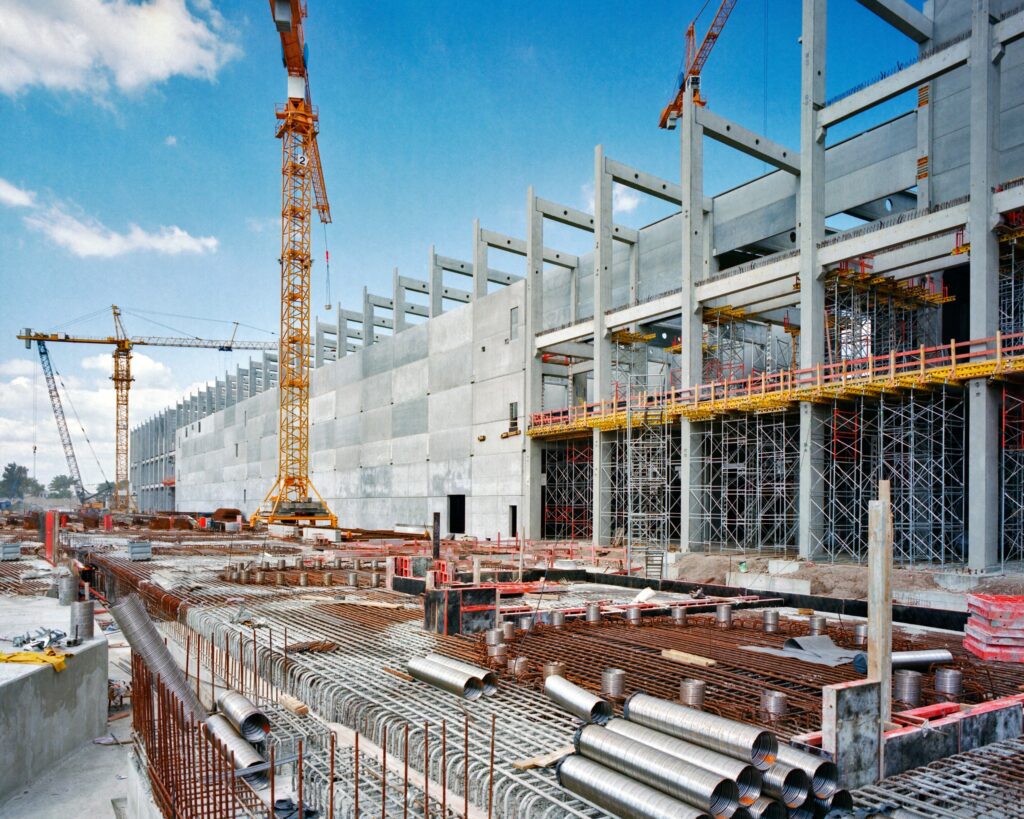
Standard for most PEB projects on good sandy soil. Pad sized for the column vertical load + moment, typically 1.5-3 m square × 0.4-0.6 m deep. Tie beams between pads resist column moments and prevent differential settlement.
Strip and combined foundations
Used when columns are closely spaced or where adjacent column loads combine. Common at building corners and at intermediate frame lines.
Raft foundations
Required when bearing pressure is low (poor soil) or where loads are heavy and contiguous. A raft spreads the load across the whole footprint, reducing settlement and accommodating differential ground conditions. Cost premium 30-80 % over isolated pads.
Pile foundations
Required for:
- Coastal sites with poor surface soils and good bearing layer at depth
- Heavy concentrated loads (large PEB spans with heavy cranes)
- Expansive clay where shallow foundations would heave
- High water table sites where excavation becomes impractical
Driven precast concrete piles common in coastal Saudi; bored cast-in-place piles for heavier loads or where vibration is a concern.
Anchor bolt design — the PEB-specific detail
PEB columns transmit moment to the foundation through clusters of anchor bolts. Design considerations:
- Cluster geometry per the column moment and shear at the base
- Typical bolt sizes M24-M42 depending on column
- Embedment depth sufficient for tension capacity (typically 400-800 mm) — often with hooks or anchor plates
- Setting template provided by PEB OEM to ensure precise location
- Sleeve provisions for fine adjustment during erection
- Grout pocket beneath base plate for level adjustment
Floor slab — separate but adjacent
The PEB floor slab is a separate scope but mechanically interacts with the foundations:
- Saw-cut joint pattern aligned with column grid (joints should not cross under column bases)
- Slab thickness sized for design vehicle and rack loads (typical 150-250 mm for warehouse)
- Mesh or fiber reinforcement
- Floor flatness and levelness (FF/FL) spec coordinated with operational requirements
- Surface treatment (sealer, hardener, anti-static where required)
Where this fits
Our industrial PEB team in Saudi Arabia handles foundation design and execution alongside PEB structure — coordinated as a single delivery. We’ve executed PEB foundations across sandy, coastal and clay sites across the Kingdom; happy to share comparable references.