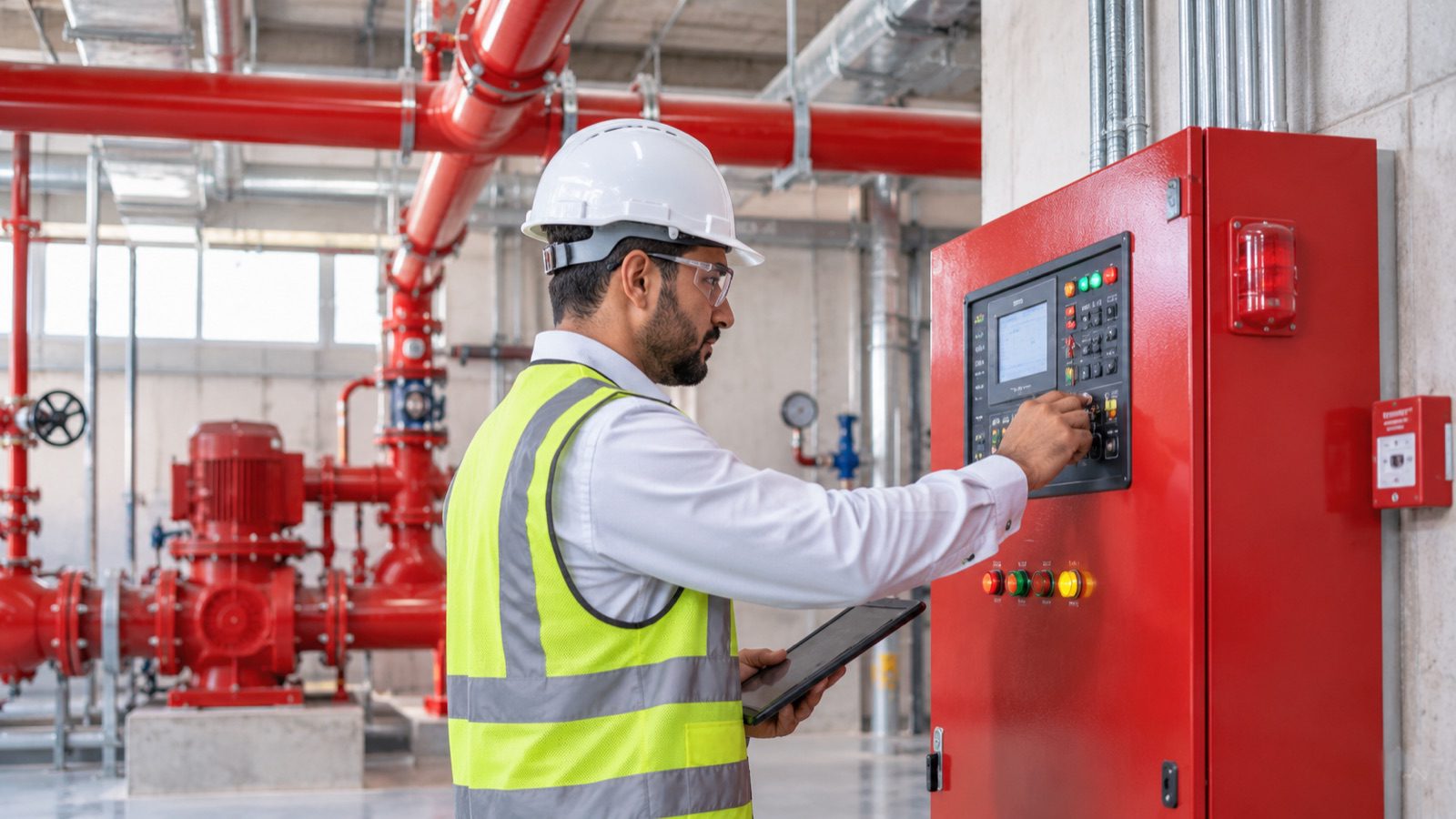
Why fire system maintenance is not optional in Saudi Arabia
A fire alarm or sprinkler system that passed handover five years ago is not automatically a working system today. Detectors drift, batteries age, valves seize and pumps lose pressure, especially in the heat and dust of Jeddah, Riyadh and the Eastern Province. Saudi Civil Defense expects building owners to keep life-safety systems operational at all times, and the Saudi Fire Code (SBC 801) references NFPA standards for inspection, testing and maintenance. As a firefighting systems contractor in Saudi Arabia, we see the same preventable failures again and again. This checklist shows what should be done, and how often.
Fire alarm system maintenance checklist
Monthly
- Check the fire alarm control panel (FACP) shows normal status, with no unacknowledged faults or disabled zones.
- Verify primary and standby power indicators and look for battery fault messages.
- Walk the building: detectors not covered, painted or blocked by new partitions; manual call points accessible and undamaged.
- Log every fault and false alarm with its cause. Repeated false alarms in one zone usually mean a dirty or wrongly located detector.
Quarterly to semi-annual
- Functional test of a rotating sample of smoke and heat detectors using approved test aerosol or heat tools.
- Test sounders, strobes and voice evacuation in each zone and confirm audibility in noisy plant areas.
- Test interfaces: HVAC fan shutdown, smoke dampers, lift homing, door release and access-control fail-safe.
- Load-test standby batteries and replace any that cannot hold the required standby and alarm duration.
Annual
- 100% test of all initiating devices, notification appliances and cause-and-effect logic.
- Clean or replace detectors according to manufacturer guidance; dust is the main enemy in Saudi buildings.
- Update as-built zone charts and confirm that the panel programming matches the current floor layout after any fit-out.
Firefighting (water-based) system maintenance checklist
Weekly
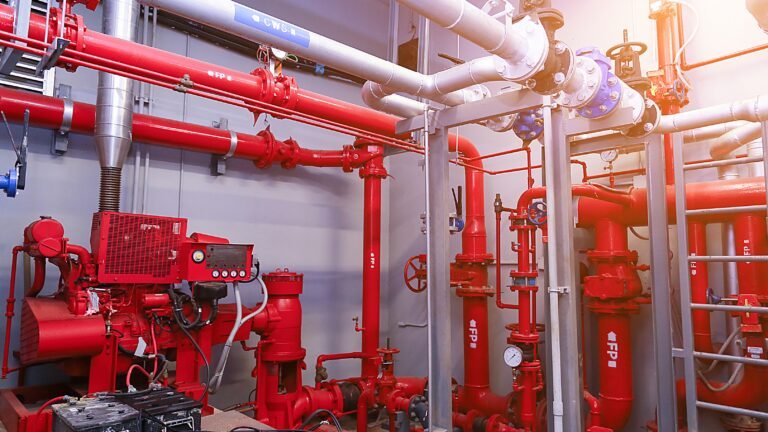
- Fire pump room: suction and discharge pressures normal, jockey pump not short-cycling, room ventilated and clean.
- Control valves locked or supervised in the open position.
- Diesel fire pump: fuel level, battery condition, and no oil or coolant leaks.
Monthly
- Run the diesel fire pump (and electric pump as required) under no-flow conditions and record start time, pressures and temperatures.
- Inspect sprinkler heads in visible areas: no paint, corrosion, damage or storage within the clearance zone.
- Check fire hose reels and cabinets, landing valves and fire extinguisher tags.
Quarterly
- Main drain test to confirm the water supply has not deteriorated.
- Test water-flow and tamper switches and confirm they report correctly on the fire alarm panel.
Annual
- Full-flow fire pump performance test against the pump curve.
- Inspect water storage tank, strainers and backflow preventers.
- Test deluge, pre-action or foam systems according to their specific standard and manufacturer requirements.
The most common failures we find in Saudi buildings
- Isolated zones that were never re-enabled after a fit-out or a false alarm.
- Dead standby batteries: heat shortens battery life well below the label rating.
- Fire pumps left in manual or with closed suction valves after maintenance.
- Painted or obstructed sprinkler heads in renovated shops and offices.
- Broken interfaces: the alarm works, but the AHUs keep running and spread smoke.
Preparing for a Civil Defense inspection
Before any inspection or license renewal, make sure you have an up-to-date maintenance logbook, the latest test reports signed by a qualified contractor, as-built drawings, and evidence that all faults found have been closed. Inspectors look for a system that is maintained, not just installed. A structured MEP maintenance contract that includes life-safety systems keeps those records in one place.
In-house team or specialist contractor?
Facility teams can handle visual checks and logging. Functional testing, pump performance tests, panel programming and cause-and-effect verification need trained technicians, calibrated tools and manufacturer knowledge. Most owners combine both: their own staff do the weekly checks, and a specialist handles the scheduled tests under an operation and maintenance agreement.
Frequently asked questions
How often should a fire alarm system be tested in Saudi Arabia?
Visual checks monthly, partial functional testing quarterly or semi-annually, and a full 100% test of devices and interfaces at least once a year, following SBC 801 and the referenced NFPA standards.
Who can maintain fire systems for Civil Defense purposes?
Use a contractor qualified for fire and life-safety systems who can issue signed test reports. Check the current Civil Defense requirements for your building category before appointing one.
Why does my fire alarm keep giving false alarms?
The usual causes are dust-contaminated detectors, the wrong detector type for the space (for example smoke detectors near kitchens), damaged wiring, or humidity. A zone-by-zone fault log usually pinpoints the cause quickly.
Book a fire system inspection
ProTech inspects, tests and maintains fire alarm, sprinkler, fire pump and suppression systems across Jeddah, Riyadh and the Eastern Province. Contact us for a site survey and a maintenance plan built around your building.