When temporary cooling becomes necessary
In Saudi Arabia a building without cooling is not usable for long: tenants leave, data rooms overheat, and food and medicine spoil. Temporary cooling bridges the gap when the permanent plant cannot run. Planning it in advance, rather than in the middle of a crisis, saves money and avoids damage. As an HVAC contracting company in Saudi Arabia, we plan temporary cooling around these situations.
- Chiller breakdown in summer, such as a compressor failure with weeks of lead time for parts.
- Planned chiller replacement: the old unit is removed before the new one is commissioned. See chiller repair vs replacement.
- Major maintenance, for example tube cleaning, overhaul or cooling tower repairs.
- Peak load support for events, Ramadan and Hajj season occupancy, or temporary production lines.
- Construction phases, to cool areas handed over before the permanent plant is ready.
Options for temporary cooling
Rental chillers
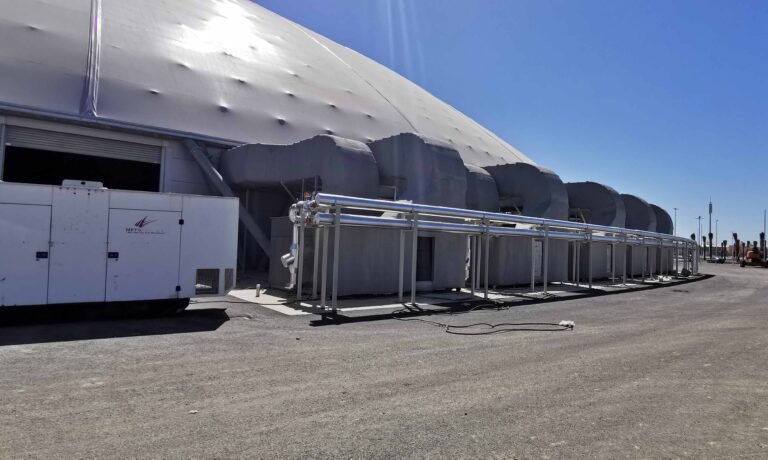
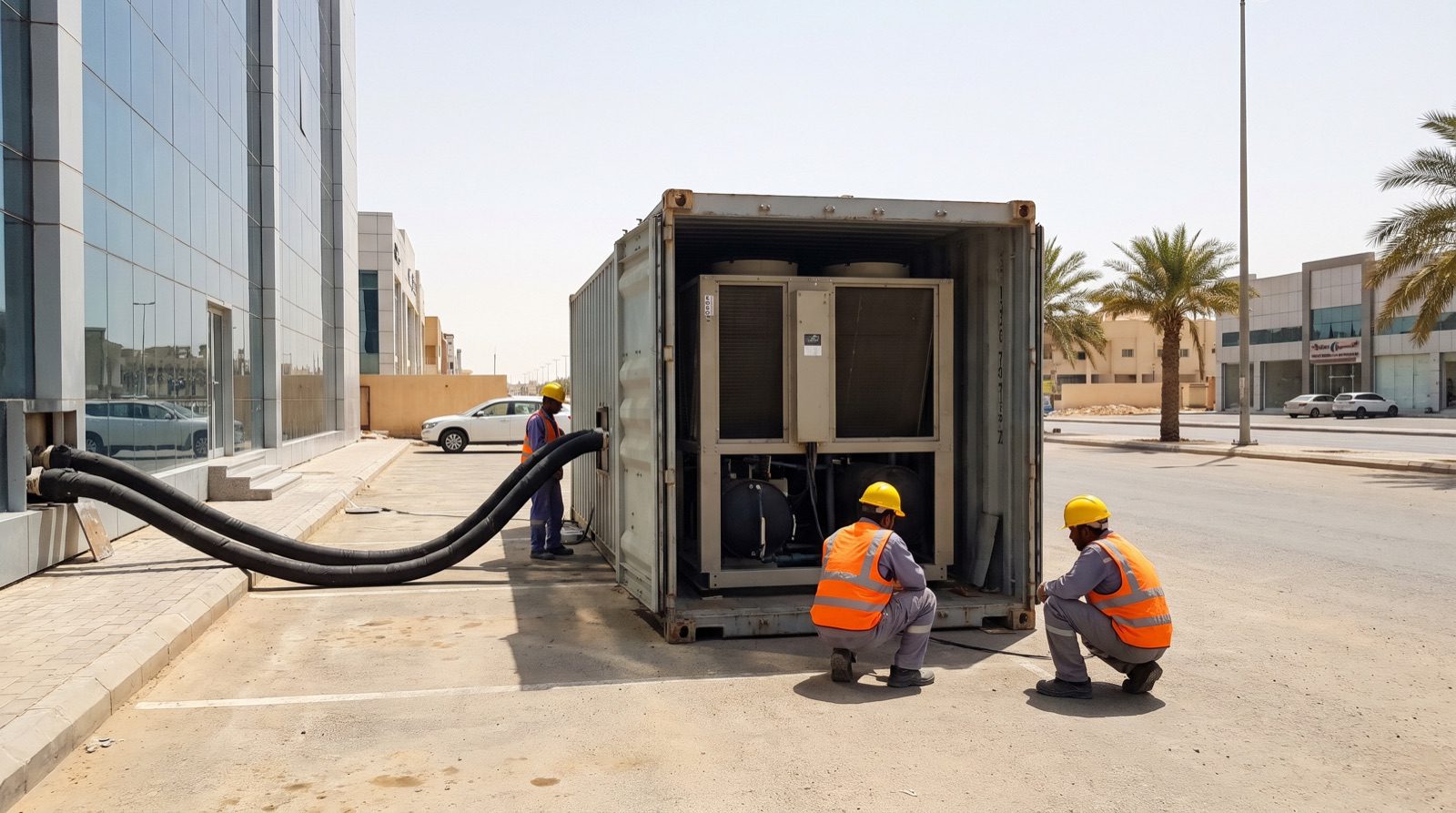
Air-cooled chillers in containers or on trailers, connected to the building’s chilled water system through flexible hoses and isolation valves. Best for buildings with a central chilled water system.
Packaged or spot coolers
Self-contained units with ducting for specific rooms, warehouses or events. Best where there is no chilled water system, or only one area needs cooling.
Temporary AHUs and ducting
Used when the air side has failed or is being replaced, often combined with a rental chiller.
How to size and plan it
- Define the critical load: what must be cooled (server rooms, operating theatres, cold rooms) and what can tolerate higher temperatures.
- Calculate the capacity from the actual peak load, not the nameplate of the failed chiller. Partial cover is often enough at night or off-peak.
- Plan the connection points. Install permanent tie-in valves and flanges on the chilled water header now, so a temporary chiller can be connected in hours instead of days.
- Power: confirm whether the building’s electrical capacity can feed the rental unit, or whether a temporary generator is needed. Check spare breaker capacity in the main board.
- Location and access: crane or truck access, ground bearing, noise limits and neighbour impact.
- Approvals and safety: permits for road or car-park use, refrigerant handling and electrical isolation procedures.
Build a contingency plan before summer
Critical facilities such as hospitals, data centres, cold stores and hotels should keep a written temporary cooling plan with the required capacity, the connection details, a power solution, approved suppliers and the steps to follow. Combine it with a chiller maintenance contract so failures are rarer and spotted earlier.
Frequently asked questions
How quickly can a temporary chiller be connected?
With pre-installed tie-in points and power ready, connection can take hours. Without them, piping and electrical work can take several days.
Is it better to rent or repair a failed chiller?
Often both. Temporary cooling keeps the building running while the permanent chiller is repaired or replaced.
Can temporary cooling run a whole mall or hospital?
Yes, with several units in parallel, but it needs careful hydraulic and electrical planning. Most owners cover the critical load first.
Plan your temporary cooling
ProTech plans, connects and commissions temporary cooling for chiller breakdowns and replacements across Saudi Arabia. Contact us to prepare a contingency plan for your building.