Why VRF is popular in Saudi buildings
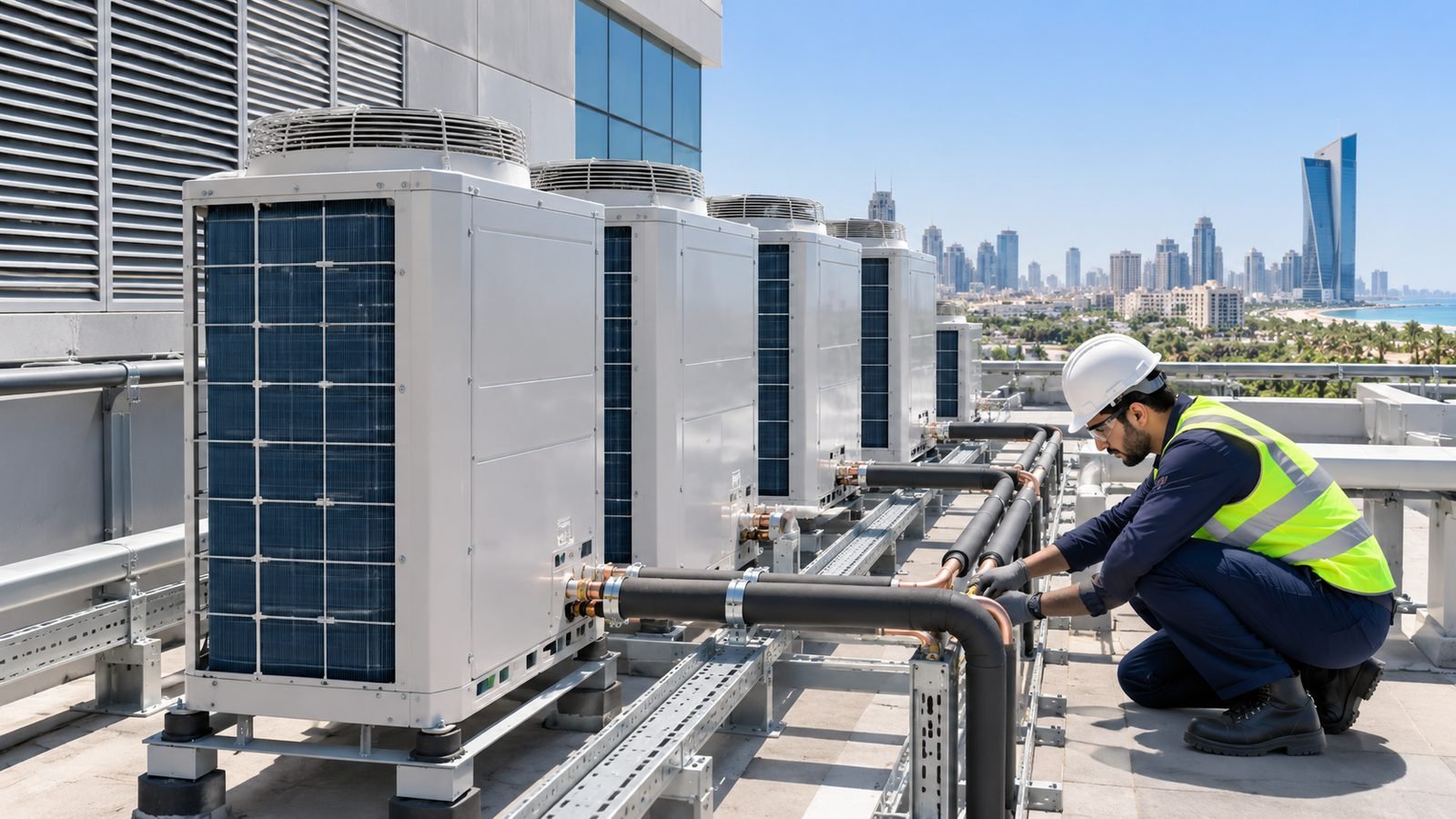
Variable refrigerant flow (VRF) systems give offices, clinics, hotels and villas individual room control, good part-load efficiency and a much faster installation than a chilled-water plant. They do not need a plant room or cooling tower, which saves space. But VRF is unforgiving. Poor design or installation leads to capacity loss in the Saudi summer, refrigerant leaks and high bills. For a full system comparison, see VRF vs chiller for office buildings.
Design essentials for Saudi conditions
1. Select at real peak ambient
Outdoor units lose capacity as ambient temperature rises. In Riyadh and inland cities, select for high-ambient conditions. In Jeddah and the Eastern Province, allow for humidity and latent load. Check the manufacturer’s capacity tables at your design temperature, not the nominal rating.
2. Respect piping limits
Every VRF range has maximum pipe lengths, height differences between indoor and outdoor units, and limits between indoor units. Breaking them reduces capacity and oil return. Plan outdoor unit locations early with the architect.
3. Refrigerant concentration safety
One VRF system can hold a large refrigerant charge. In small rooms, a leak can exceed safe concentration limits. Check this room by room against the applicable standard and add leak detection or system splits where needed.
4. Fresh air is separate
VRF indoor units recirculate air. Fresh air needs a dedicated outdoor-air unit or heat recovery ventilators, sized for code ventilation rates. In humid cities this unit also handles dehumidification.
5. Condensate and access
Plan condensate drainage with proper falls, and give access panels to every indoor unit, so maintenance is possible without breaking ceilings.
Installation steps
- Shop drawings and refrigerant piping calculations approved by the manufacturer’s selection software.
- Brazing with nitrogen purge to prevent internal oxidation. This is the number one cause of compressor failures.
- Pressure test with nitrogen, then a deep vacuum (triple evacuation where specified).
- Additional refrigerant charge calculated from actual pipe lengths and recorded on the unit.
- Wiring and addressing of the control network, then commissioning with the manufacturer’s tool and a test-run report for each unit.
What affects VRF installation cost
- Total capacity and number of indoor units, and the indoor unit types (cassette, ducted, wall).
- Heat-recovery versus heat-pump systems.
- Length of refrigerant piping and difficulty of routing.
- Fresh air and ventilation equipment.
- Central controls, BMS integration and energy metering per tenant.
- Electrical works to the outdoor units.
Common VRF mistakes we fix
- Outdoor units crammed into enclosures with hot-air recirculation, which cuts capacity on hot days.
- Oversized systems that short-cycle and fail to dehumidify.
- No fresh-air provision, so stuffy rooms and poor indoor air quality. See our indoor air quality guide.
- Brazing without nitrogen, so debris blocks the expansion valves.
Frequently asked questions
Is VRF suitable for Saudi summer temperatures?
Yes, if the outdoor units are selected and placed for the real peak ambient, with good airflow around them.
How long does VRF installation take?
For a typical office floor or villa, a few weeks, depending on ceiling access, piping routes and fresh-air works.
Does VRF need maintenance?
Yes: filter cleaning, coil cleaning, condensate checks and an annual system check of refrigerant, controls and electrical connections. See HVAC maintenance.
Plan your VRF project
ProTech designs and installs VRF systems for offices, clinics, hotels and villas across Saudi Arabia. Request a site survey.