Why water tanks matter more in Jeddah than almost anywhere
Most buildings in Jeddah rely on water storage: an underground tank fed by the network or by tanker trucks, and a roof tank that feeds the building by gravity. In high temperatures, stored water becomes an ideal environment for sediment, biofilm, algae and bacteria, including Legionella. A neglected tank turns clean supply water into a health risk for every tenant. Tank hygiene is one of the most overlooked parts of water treatment in Saudi Arabia, and one of the cheapest to fix.
How often should tanks be cleaned?
- Residential and office buildings: at least every 6 months, which is common practice in Jeddah’s climate.
- Hospitals, hotels, restaurants, schools and food facilities: every 3–6 months, plus regular water testing.
- Immediately after any contamination event, pipe burst, flooding, long vacancy, or when users report colour, smell or taste problems.
Always check the current requirements of the municipality and of your sector regulator, for example healthcare or food authorities.
Warning signs your tank needs attention now
- Yellow or brown water, or sediment in taps and flush tanks.
- Musty, earthy or chlorine-free smell.
- Skin irritation complaints from occupants.
- Damaged or missing tank covers, gaps around manholes, or insects visible.
- Cracks, leaks or damp walls around underground tanks.
The correct cleaning and disinfection process
- Planning: notify tenants, arrange a temporary supply if needed, and isolate the inlet.
- Drain: pump the tank down, keeping a small amount of water to flush sediment.
- Remove sludge: remove settled sludge and debris mechanically. Never leave it to flow into the distribution pipes.
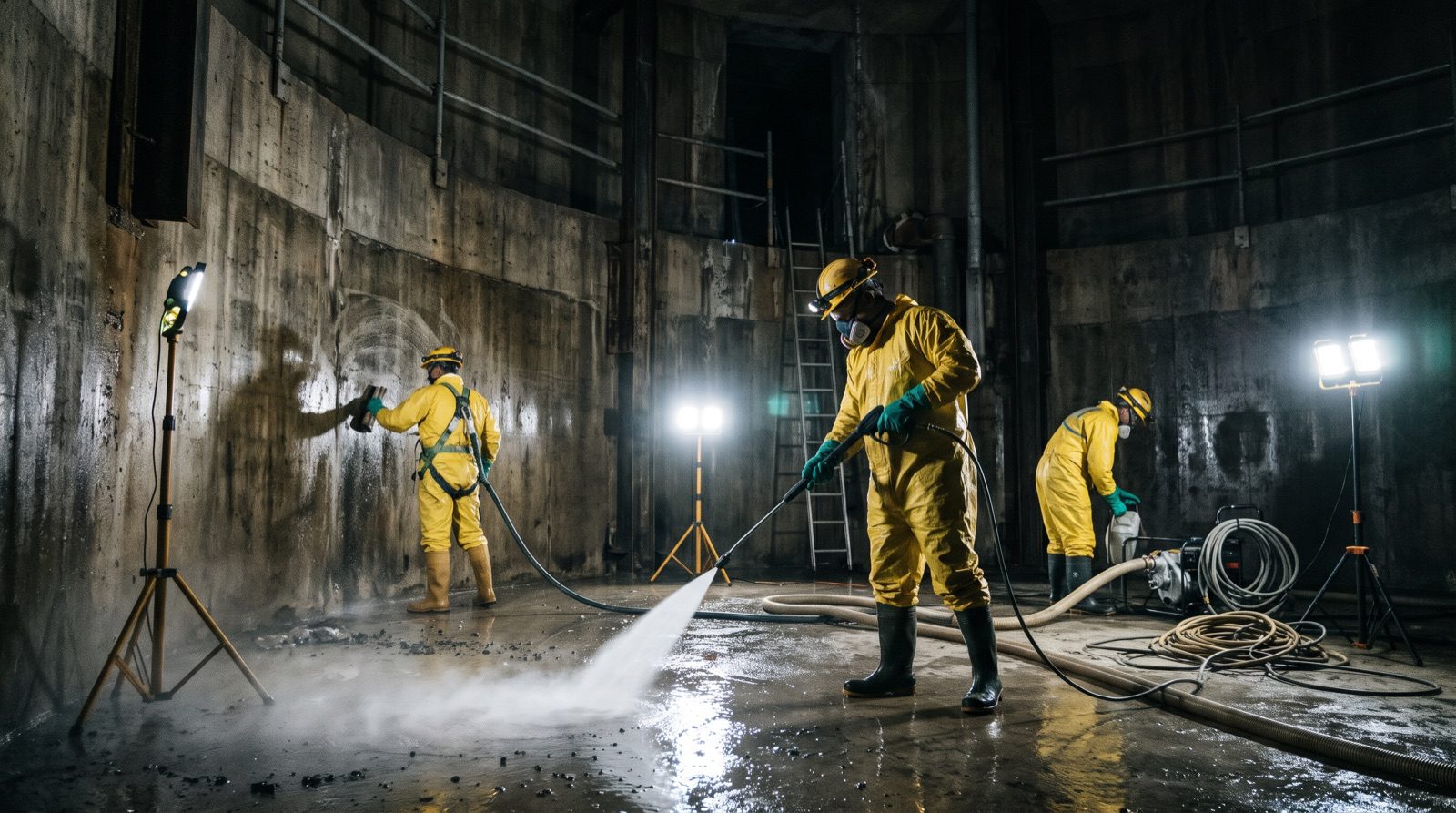
- Scrub and pressure-wash walls, floor and ceiling to remove biofilm.
- Disinfect with an approved chlorine-based disinfectant at the correct concentration and contact time.
- Rinse and refill, then flush the building’s risers and outlets.
- Test: measure residual chlorine and pH on site, and take samples for laboratory bacteriological testing.
- Report: before-and-after photos, chemicals used, test results and recommendations.
Safety note: tanks are confined spaces. Work must be done by trained staff with gas monitoring, ventilation, harnesses and a standby person. Never send untrained workers inside.
Fix the cause, not just the symptom
Cleaning alone does not solve recurring problems. Common root causes include:
- Poor covers and vents: fit sealed, lockable manholes and screened vents.
- Cracked tank walls: repair and apply a certified potable-water epoxy lining.
- Oversized tanks: water stays too long and loses its chlorine. Consider sizing or circulation changes.
- Old galvanised pipes: rust comes from the pipework, not the tank. See our plumbing systems services.
- Tanker water quality: add filtration and dosing at the inlet.
Adding treatment for consistent quality
For hotels, hospitals and larger buildings, a small treatment skid gives continuous protection. Typical components are sand or multimedia filtration, a chlorine dosing pump, UV disinfection and, where needed, softening or reverse osmosis. Pair it with scheduled maintenance under an O&M contract so filters and dosing are not forgotten.
Frequently asked questions
How long does water tank cleaning take?
A typical building tank takes a few hours to one day, depending on size and sludge volume. Supply is usually restored the same day.
Is chlorine safe for drinking water tanks?
Yes, when approved products are used at the correct dose and the tank is rinsed before refilling. Residual chlorine is then tested to confirm safe levels.
Do I need a lab test after cleaning?
It is strongly recommended, and often required for healthcare and food facilities, to confirm the absence of coliform bacteria.
Schedule a tank cleaning
ProTech cleans, disinfects, repairs and lines water tanks, and installs treatment systems for buildings across Jeddah and the Western Region. Contact us to book an inspection.